Do You Already
Think Like a Trader?
Twenty quick true-or-false questions, all drawn from my 344-term trading glossary. Round 1 is vocabulary. Round 2 is how traders actually think — inspired by the 1983 test that screened the legendary Turtle Traders. No signup to start; see your score the moment you finish.
Last updated July 15, 2026
Most people lose money in the market before they lose an argument about it — because they start trading before they can define the words on their own screen. They buy because a stock is “breaking out” without being able to say what that means, or hold a loser because they never really understood what a stop was for. The vocabulary isn't academic. It's the difference between a decision and a guess.
This quiz is a fast, honest check on where you actually stand — twenty true-or-false questions, no signup required to see your Round 1 score. It comes in two halves, and the second half has a story behind it worth knowing before you begin.
What Round 1 tests: can you read your own screen?
The first ten questions are pure vocabulary, drawn straight from the trading glossary. Not trick questions — just the terms you'll meet in your first week and need to actually know: what a float is and why a small one matters, what VWAP tells you, what Level 2 shows, why a catalyst moves a stock, what short selling actually involves. If you can't answer these cold, that's not a failure — it's the most useful thing this quiz can tell you, because it means you now know exactly what to go learn before you risk a dollar.
What Round 2 tests: the part that actually predicts survival
The second half isn't about definitions at all, and it has a real pedigree. In 1983, commodities trader Richard Dennis made a bet with his partner William Eckhardt: that trading could be taught, that it wasn't an innate gift. To settle it, he recruited a group of complete novices — the “Turtles” — and screened a thousand applicants with a true/false test. What he was really measuring wasn't knowledge. It was temperament: how a person thinks about risk, loss, uncertainty, and being wrong.
The Turtles went on to make hundreds of millions of dollars, and the experiment became one of the most famous proofs in trading that mindset is learnable and mindset is decisive. Round 2 is built in that spirit. There are no right answers to memorise — only answers that reveal how you'll actually behave when real money is moving against you. Most people score well on Round 1 and get humbled by Round 2. That gap is the single most useful thing you'll learn here.
Round 1 · Vocabulary
Where these questions come from
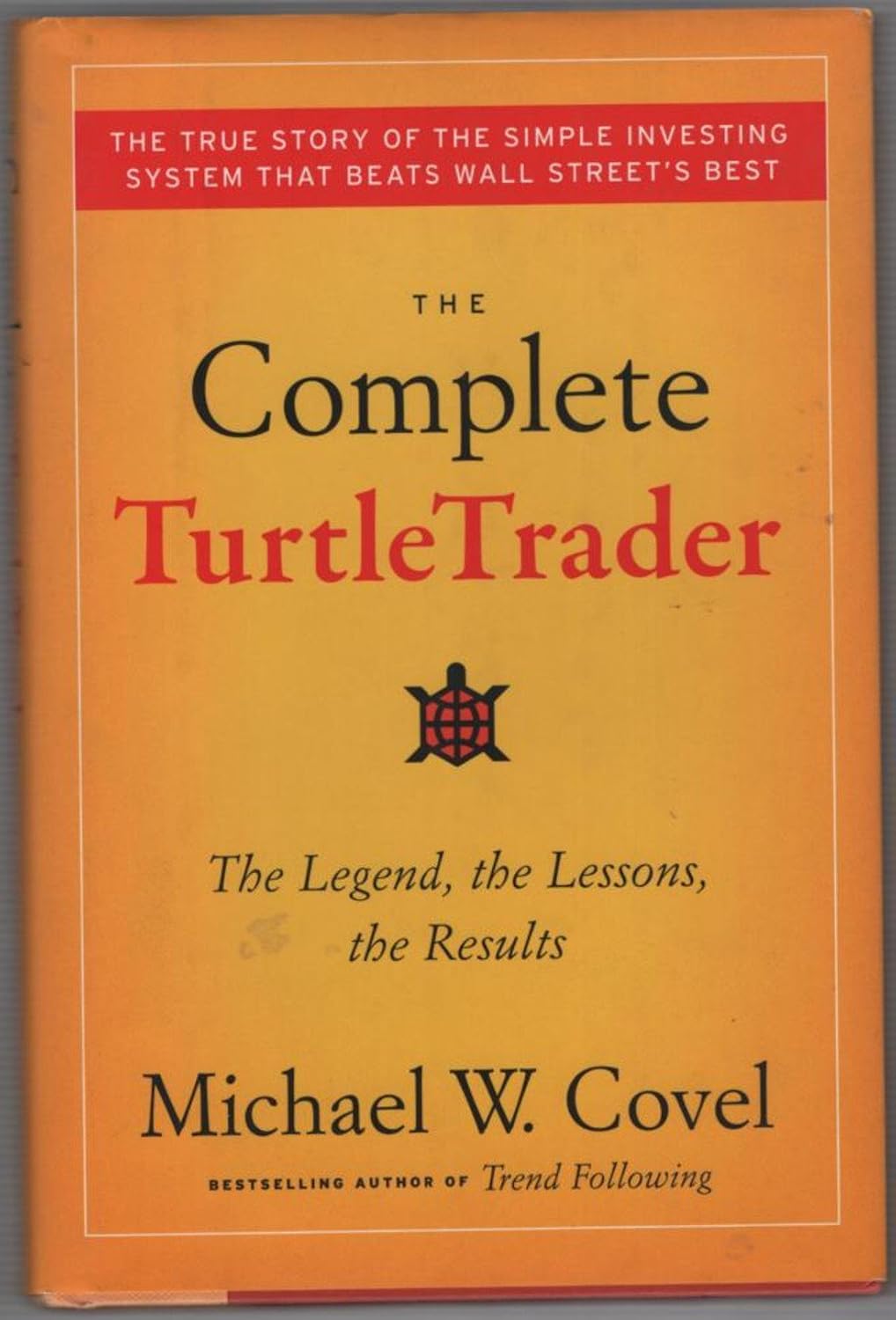
Round 2 was inspired by the true/false test Richard Dennis used to screen 1,000 applicants in 1983 — the novices who became the Turtles. The full story, and the original test, is in Michael Covel's The Complete TurtleTrader.
Read The Complete TurtleTrader Book →Affiliate link — I may earn a small commission at no cost to you. I only recommend what I've actually read or use.